


By Grant Whitfield | Last updated: October 4, 2026
Want to know how to choose a luxury destination without the guesswork? Start with yourself, not the map. Hundreds of places look perfect online. However, only a few fit your goals, budget and dates. This guide gives you 11 clear steps to find them.
Quick Answer : How to Choose a Luxury Destination
To choose a luxury destination, follow these steps:
- Set your travel goals, budget and travel style.
- Match them to places that fit your season, flight time and entry rules.
- Check safety, accessibility and local costs.
- Compare two or three options before you decide.
Next, let’s look at each step in detail.
Step 1: Clarify Your Travel Goals
Start with the “why,” not the “where.” Many travelers pick a place first. As a result, they often find it does not fit their needs. That is why the first rule of how to choose a luxury destination is to know your goal.
Ask yourself what this trip should do for you. For example, you may want one of these:
- A celebration, such as an anniversary
- Deep rest and quiet
- Adventure or wildlife
- Culture, food and history
- Wellness and recovery
- Time with family or time alone
You can pick more than one goal. Even so, rank them, because your top goal should guide every other choice.
Example: Maya wants a quiet week after a stressful year. Her top goal is rest. Therefore, a busy multi-city tour is a poor fit, while a calm beach or wellness stay suits her well.
Step 2: Identify Your Travel Style
Next, match your goal to a travel style. Your style narrows the list fast. For instance, a calm beach resort and a busy city break are very different trips.

Here are three simple examples. If your goal is rest, a beach resort in a dry, calm season may fit well. If your goal is culture, a historic city in a quieter month may work better. Similarly, if your goal is wildlife, a safari in the animal-viewing season is a strong match. These are examples of style, not a “best” list.
Step 3: Set Your Budget Range
Luxury means different things to different people. Therefore, set a clear budget before you search. Split it into total budget, daily budget, hotel or villa, flights, experiences and a buffer. As a simple rule of thumb, keep about 10% in reserve for surprises.
The table below shows sample daily budgets per person, excluding flights. These are rough planning examples only. In fact, real prices vary widely by place and season.
Also, some places are costly all year, while others offer better value in shoulder season. Moreover, a place with fair room rates can still have high food and activity costs.
To add up every cost, use our luxury travel budget planner.
Step 4: Match Your Season
Timing can make or break a trip. A top destination in the wrong month can disappoint you. So, check the season early.
- Peak season: First, expect the best weather. However, prices and crowds are higher.
- Shoulder season: Often, prices are milder and crowds are smaller.
- Off-season: Rates are lower. On the other hand, some places close.
- Weather: Also, check rain, heat and storm patterns.
- Events and school holidays: These can raise prices and fill rooms.
- Wildlife movements: Likewise, safari timing matters a lot.
For example, an island with a clear dry season may be calm and sunny for several months, then wet and windy for the rest. In short, check the local calendar before you commit.
Once you know your season, read our guide on the best time to book luxury travel.
Step 5: Consider Flight Time and Connections
A dream destination can feel less dreamy after 20 hours in transit. So, decide your limit for flight time early.
- Total travel time: First, include layovers and airport transfers.
- Direct or connecting: Direct flights save energy. However, they may cost more.
- Layover comfort: Short layovers add risk, while long ones are tiring.
- Jet lag: Big time-zone changes can cost you a day or two.
- Separate tickets: If one flight is late, the airline may not protect your next one.
Long-haul trips usually need more days to feel worth it. Meanwhile, short-haul trips work well for a long weekend.
Step 6: Check Visa and Entry Rules
Entry rules can change your plan quickly. Moreover, they depend on your passport, not just the country you visit.
- Visa needs: Some visas take days or weeks to process. Therefore, start early if you need one.
- Electronic travel authorization: Some places ask you to apply online before you fly.
- Passport validity: Many countries require at least six months of validity beyond your departure date. Still, check the exact rule for your destination.
- Blank pages: Besides that, some countries ask for one or two free pages.
- Health rules: Vaccine and health rules vary by place. The CDC Travelers’ Health site is a good starting point.
- Taxes and fees: Finally, add tourist taxes and entry fees to your budget.
Some places are visa-free for certain passports, while others need weeks of paperwork. Because rules change, use official sources only. For U.S. passport holders, the U.S. Department of State lists entry rules by country.
Step 7: Review Safety and Stability
Safety matters for every traveler. However, conditions can change. A destination that is safe today may look different in six months. For this reason, check again before you book and again before you fly.
Safety also differs inside a country. One region may be calm, while another is not. Review these points:
- First, read government travel advisories.
- Then, check political stability and crime levels.
- Next, look at health risks.
- Also, consider natural disaster risks, such as storms or earthquakes.
- Finally, compare differences between regions.
In addition, buy travel insurance that fits your plans. U.S. travelers can also sign up for the Smart Traveler Enrollment Program (STEP) to get safety alerts from the nearest U.S. embassy.
Step 8: Assess Accessibility Needs
Luxury does not always mean accessible. Many top hotels sit in old buildings or remote spots. Therefore, check this step with care if you or a family member has mobility needs.
- Entry and paths: First, ask about step-free access.
- Rooms: Next, check bathroom design, lifts and room location.
- Transport: Then, ask about accessible transfers and tours.
- Nearby medical care: Finally, check how far the nearest hospital or clinic is. This matters most for remote lodges, villas and safari properties.
Details vary by property, not just by destination. So, contact the hotel directly, ask clear questions and get answers in writing.
Step 9: Estimate Local Costs
The room rate is only part of the price. Daily costs add up fast. For this reason, compare the full trip cost, not just the hotel.
- Meals and drinks: These can cost more than the room in some places.
- Activities and guides: In addition, private guides raise the bill.
- Transfers: Airport and local transfers can be costly in remote areas.
- Tips: Customs vary by destination. Some places include service charges, while others do not. Our first luxury trip guide explains this in more detail.
- Currency: Exchange rates and foreign-transaction fees can affect your daily budget. Therefore, check your card fees before you leave.
For example, one island may have a fair room rate but costly meals. Similarly, a safari lodge may include food and drinks, while a city hotel may not.
Step 10: Match the Destination to the Traveler Type
Different travelers need different things. A place that suits a couple may not suit a family. Likewise, a solo traveler may want easy social options and strong safety.
- Couples and honeymooners: Privacy, views and romantic dining
- Families: Space, kids’ activities and easy logistics
- Solo travelers: Safe areas, easy transport and group tours
- Groups: Villas, shared spaces and flexible dining
- Multi-generational trips: Easy access, mixed activities and rest time
Step 11: Compare Two or Three Destinations
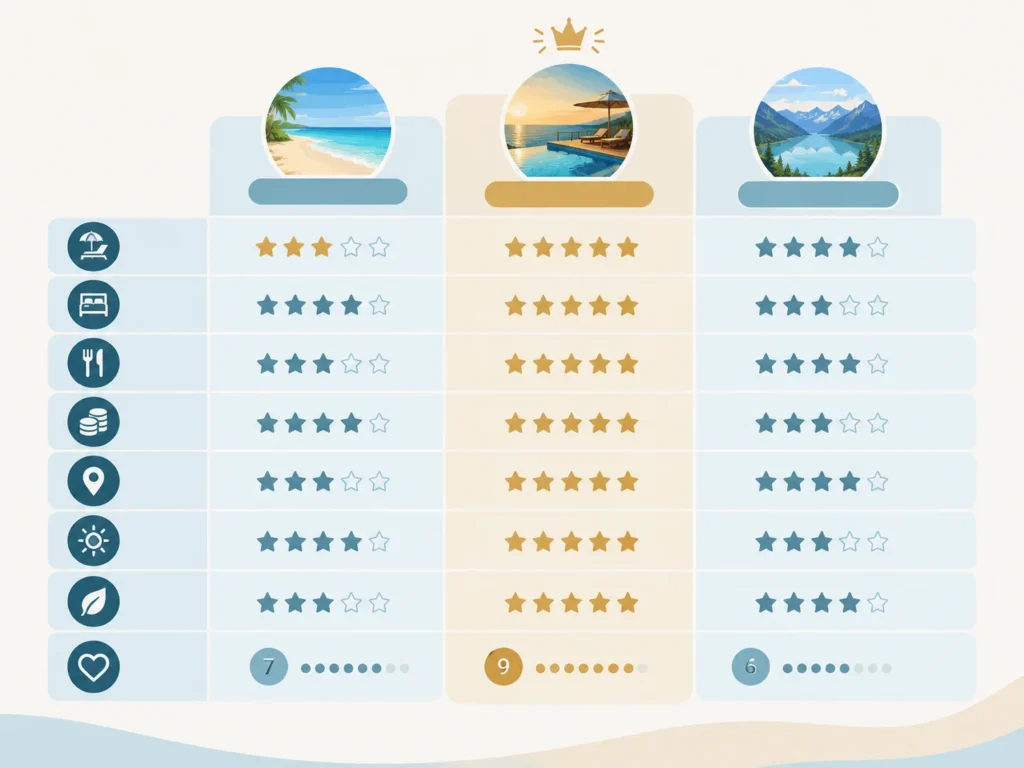
Now you can narrow your list. Pick two or three places. Use the same dates, room category and assumptions for each one. Otherwise, the comparison may be misleading. Then, score each factor from 1 to 5, where 5 always means the best fit for you.
Here is a sample comparison for a traveler who wants rest in a quiet season:
In this example, Destination A wins by a small margin. If two places tie, choose the one that best matches your top goal from Step 1. In the end, the total trip cost matters more than the room rate.
After you pick a place, shape your days with our luxury travel itinerary guide.
Mistakes to Avoid When Learning How to Choose a Luxury Destination
Avoid these errors to save time and money:
- Picking a place before setting goals. As a result, the trip often feels like a poor fit.
- Following social media only. Photos do not show costs, crowds or travel time.
- Ignoring flight time and jet lag. Both can eat into your trip.
- Skipping visa and safety checks. Consequently, you risk stress or missed travel.
- Assuming luxury means accessible. Always confirm the details.
- Underestimating local costs. Extras can raise your bill.
- Booking peak season too late. The best rooms go early.
- Ignoring your travel style or traveler type. For instance, a busy city is a poor match for a rest trip.
Checklist: How to Choose a Luxury Destination Before You Book
Use this short checklist before you book:
- What is my top travel goal?
- What is my budget range, including a buffer?
- Which season and travel style suit me?
- What is my maximum flight time?
- What are the visa and passport rules for my passport?
- What is the current safety profile?
- What accessibility and medical access do I need?
- What will daily costs look like?
If you can answer all eight, you are ready to book.
Frequently Asked Questions
What are the best luxury destinations for couples, families or solo travelers?
There is no single best place. Couples often want privacy and views. Families need space and easy logistics. Solo travelers value safety and simple transport. Therefore, match the place to your own needs first.
Does a higher price always mean a better luxury destination?
No. Price alone does not guarantee a good match. A destination may be expensive but not suit your goals, travel style, season or accessibility needs. Focus on fit, not only cost.
How does flight time affect destination choice?
Long flights add cost, tiredness and jet lag. As a result, they work better for longer trips. Short flights suit quick getaways.
How far ahead should I check visa and passport rules?
Check them as soon as you shortlist a place. Some visas take weeks, and many countries need six months of passport validity.
How do I avoid choosing the wrong luxury destination?
Set your goals first. Then, compare two or three options using the same dates and the same factors. Do not decide based on photos alone.
Final Thoughts
Knowing how to choose a luxury destination is really about process, not luck. It is fine to compare many options. In fact, it is smart. When your goals, budget, season and style line up, the whole trip feels better.
So, take it one step at a time. Use the checklist, score your top picks and trust the facts. If you are still at the early stage, our luxury vacation planning guide can help you build the full plan.
Official Sources for Travel Rules and Safety
Passport validity, visa rules and safety advice differ by destination. Always check these official pages before you book:
- Travel advisories and entry rules: U.S. Department of State, travel.state.gov
- U.S. passport information: travel.state.gov passports
- Embassy safety alerts: Smart Traveler Enrollment Program (STEP)
- Health information: CDC Travelers’ Health
If you are still at the early stage, our luxury vacation planning guide can help you build the full plan.
Research note: This guide gives general advice. The budget ranges and scores above are examples, not quotes. Rules, prices and safety conditions change often and vary by passport, season and property. Always confirm details with official government and destination sources before you book.
