

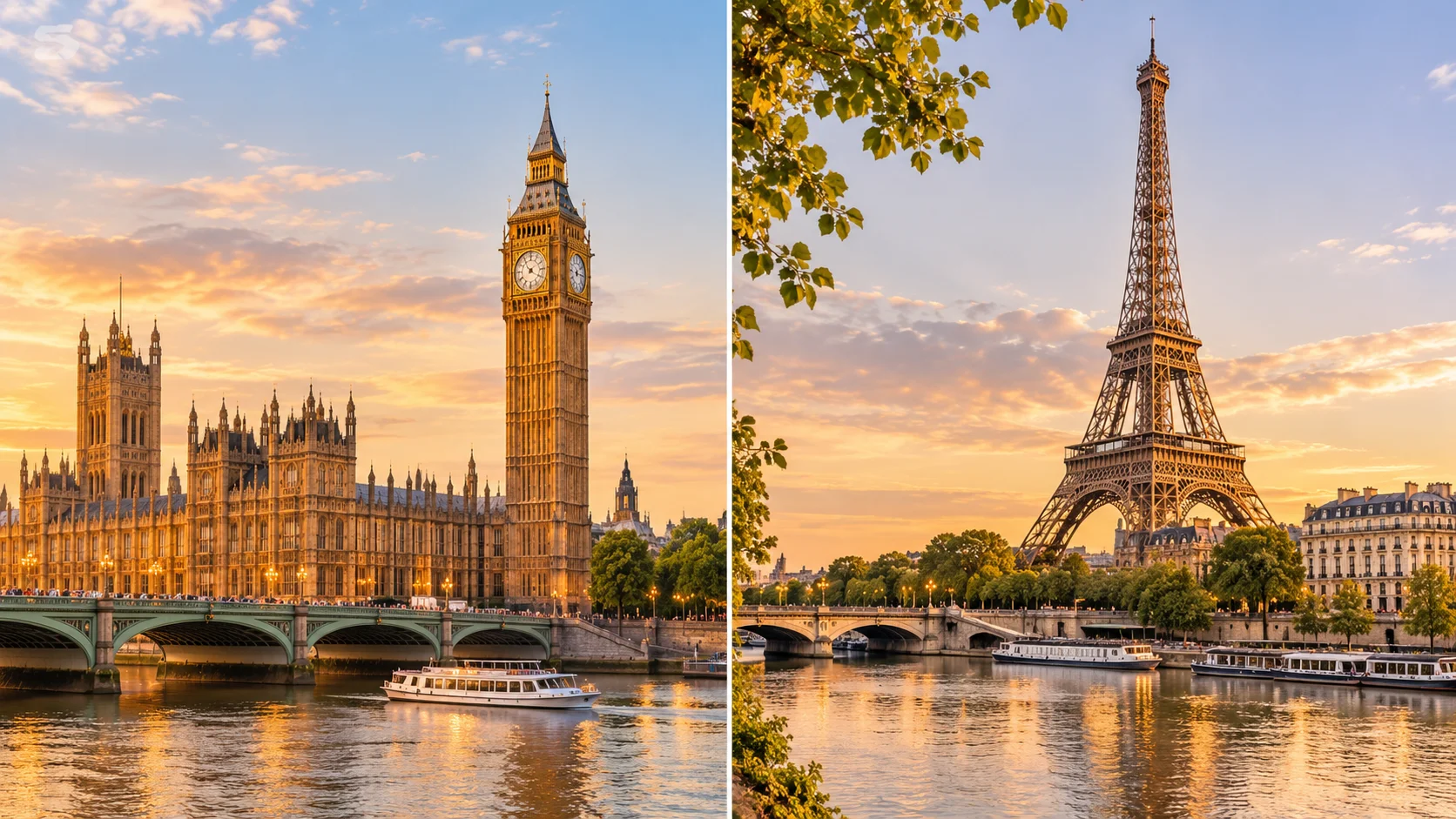
Your dream week in Europe can feel exhausting when airport queues, constant packing and rushed sightseeing take over. After spending so much, you want lasting memories—not the feeling that your vacation passed you by.
This one week luxury Europe itinerary pairs three nights in London with three in Paris, connected by train. Clear daily plans and realistic transfer allowances leave four full days for culture, dining and time to unwind.
Your Seven-Day Route at a Glance
Plan seven days in Europe and six hotel nights, with arrival on day one and departure on day seven.
- Days 1–3: London, staying nights 1–3.
- Day 4: Travel to Paris by Eurostar.
- Days 4–6: Paris, staying nights 4–6.
- Day 7: Depart Paris.
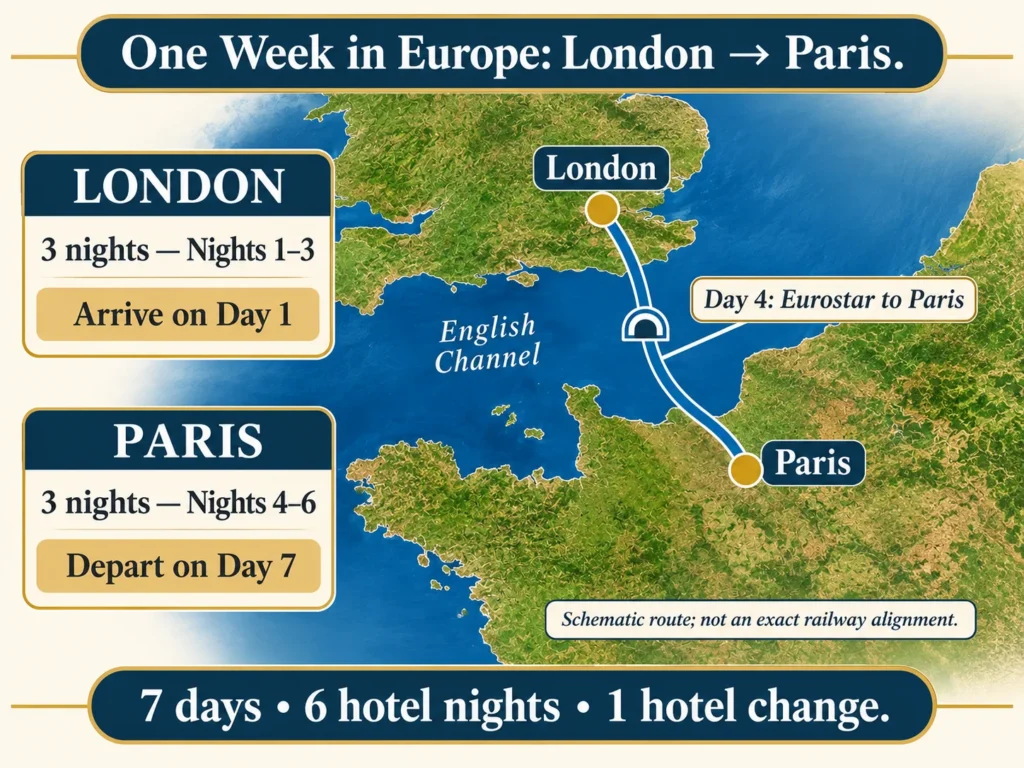
You will have two bases, one hotel change and four full days without an intercity transfer.
Where flight schedules suit, arrive in London and fly home from Paris. International travel may require additional time, particularly an overnight outbound flight. If your entire vacation allowance is seven calendar days, check the flights before using this schedule.
This route suits travelers interested in museums, architecture, food and comfortable city stays.
Plan the London–Paris Transfer Properly
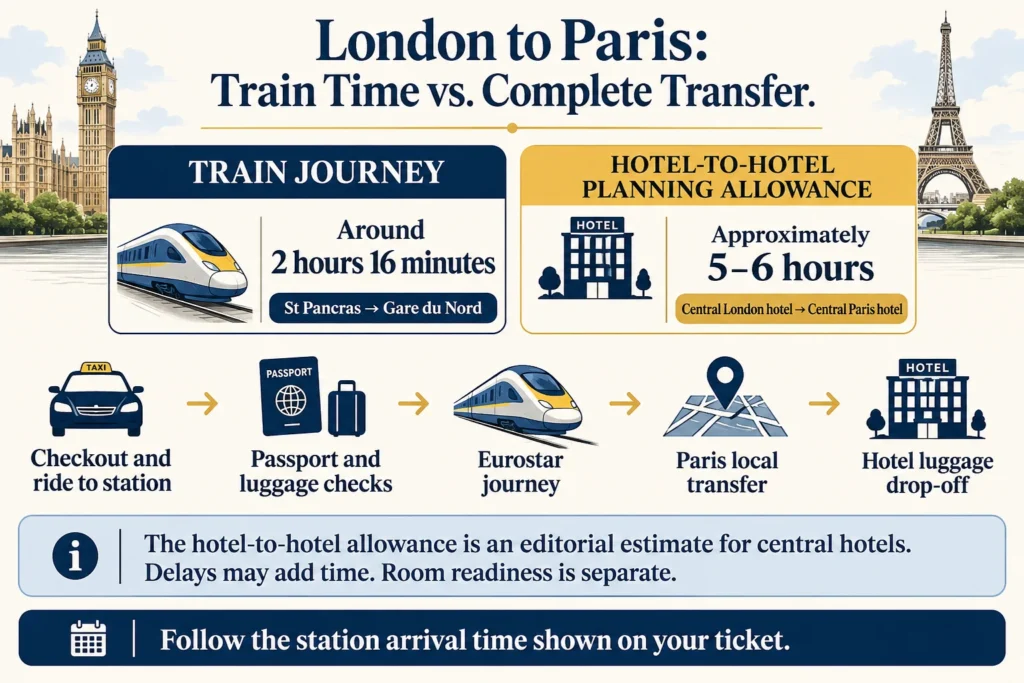
Eurostar connects London St Pancras International with Paris Gare du Nord, advertising a journey of around 2 hours 16 minutes. Check the duration of your chosen service. www.eurostar.com
The complete move takes longer. Reserve approximately five to six hours from leaving your London hotel to dropping luggage at your Paris hotel.
This is an editorial planning allowance for central accommodation. It includes local transport, station procedures, the train journey and arrival arrangements. Delays or additional assistance can increase it; room readiness is separate.
For London departures, Eurostar currently recommends arriving:
- 75 minutes before departure: Standard and Plus.
- 45 minutes before departure: Premier.
Passport and luggage checks take place before boarding. Follow the latest recommended arrival time on your ticket rather than treating the gate-closing time as your arrival target. www.eurostar.com
Day 1: Arrive in London and Keep Plans Flexible
Arrange your airport-to-hotel journey and leave the afternoon lightly scheduled. A neighborhood walk, a relaxed meal and an early night are enough after a long flight.
If arriving before check-in, ask whether early room access is guaranteed. Paying for confirmed access can be more useful than booking an activity you may be too tired to enjoy.
For this itinerary, consider a central base around Mayfair, St. James’s or Covent Garden. Compare the actual walking routes, room location and vehicle access before choosing.
Day 2: Westminster and Royal London
Make Westminster Abbey your main morning appointment. Discuss the visit with your guide beforehand, including admission, meeting point and the amount of walking involved.
Continue with an exterior view of the Houses of Parliament and, if energy allows, a walk through St. James’s Park toward Buckingham Palace. Leave time for lunch and an afternoon break.
Calendar check: Westminster Abbey opens for services on Sundays rather than ordinary tourist sightseeing. Check its visitor calendar before fixing this day. Westminster Abbey
A private guide is worthwhile when historical context matters to you. Confirm what the fee includes and where guiding is permitted.
Day 3: Art, Afternoon Tea or a West End Evening
Choose a morning around your interests: paintings at the National Gallery, shopping in Mayfair or independent exploring.
For a distinctive London experience, consider afternoon tea at Claridge’s in the Foyer & Reading Room. Its traditional service includes sandwiches, scones, pastries and a selection of teas. Reserve through the hotel and discuss dietary requirements in advance. Claridge’s
If a West End performance is your priority, organize the day around the show. Check the seating view and leave enough time between dining and curtain-up.
Choose the experiences you will appreciate most rather than turning all three into compulsory stops.
Day 4: Travel to Paris
Have breakfast, check out and travel to St Pancras according to your ticket’s recommended arrival time.
Use the train journey as a break in the week. Once in Paris, continue to your hotel, leave your luggage and have lunch before making further plans.
Keep the afternoon close to your accommodation. A short walk along the Seine or around your neighborhood gives you an introduction without creating another deadline.
For convenient sightseeing, compare hotels around the Louvre and Tuileries or Saint-Germain-des-Prés. Choose according to your planned activities and preferred evening atmosphere.
Day 5: One Major Museum and Time to Explore
Choose the Louvre or Musée d’Orsay as your main cultural visit.
For the Louvre, agree on a focused selection of galleries with your guide. Trying to cover the entire museum can consume the day without making the visit more rewarding.
Musée d’Orsay is an alternative if its collections better match your interests. Whichever you choose, allow a substantial morning, followed by lunch and a quieter afternoon.
Calendar check: The Louvre closes on Tuesdays; Musée d’Orsay closes on Mondays. Arrange your Paris days around the selected museum’s calendar and current access notices. Plan and book your visit
Day 6: Make Paris Personal
Use your final full day for an experience that reflects your interests: a guided neighborhood walk, a shopping appointment, a food-focused outing or time around the Eiffel Tower.
A Seine cruise can provide another perspective on the city. Before booking, confirm the boarding location, route, duration and whether the boat is private or shared.
Keep part of the afternoon free. This gives you room to revisit a favorite neighborhood, enjoy your hotel or accommodate a changed reservation.
Choose a final dinner that fits your location and departure preparations, rather than adding a lengthy journey across the city.
Day 7: Depart From Paris
Confirm the airport, terminal, pickup point and luggage arrangements the previous evening.
Set your hotel departure time around the booked transfer and your airline’s check-in requirements. Leave the morning free of prepaid activities that could make the airport journey stressful.
A late flight may allow a relaxed breakfast or nearby walk, but luggage storage and transport should be settled first.
Which Luxury Upgrades Add Useful Value?
A convenient room and location: Prioritize quiet, usable space and easy access to your main activities. A larger room far from your plans may offer less everyday convenience.
Specialist guiding: Use private guides for subjects you want to understand deeply. Independent exploring can fill the spaces between those appointments.
Eurostar Premier: Premier offers benefits including dedicated priority lanes, lounge access, more spacious seating and its dining service. Compare the fare difference with the benefits you expect to use. www.eurostar.com
Coordinated transfers: Confirm the final pickup and drop-off points, waiting arrangements and luggage assistance. A premium rail ticket does not automatically organize the journeys between stations and hotels.
What to Book First
Before committing, check entry requirements for both countries using the official UK checker and France-Visas guidance. Requirements depend on your circumstances and travel documents. GOV.UK
Then coordinate:
- Flights and six hotel nights, including arrival and departure arrangements.
- Essential museum visits or performances, checking their calendars.
- Eurostar tickets, once the transfer date is settled.
- Guides and local transfers, with written inclusions.
- Afternoon tea, special meals and optional experiences, around the confirmed schedule.
Compare costs for the same dates, room category and number of travelers. Include meals, admissions, transfers, applicable taxes and cancellation conditions alongside accommodation and rail fares.
Common Mistakes to Avoid
Treating the train duration as the complete transfer. Station procedures and local journeys take additional time.
Choosing hotels without checking daily access. Map your main activities from the exact property.
Assuming “private” means exclusive access. A private guide may accompany you during normal public opening hours.
Adding several distant day trips. Each excursion replaces time in London or Paris; it should be a deliberate choice.
Scheduling every available hour. Leave space for rest, changed plans and the accommodation you have chosen.
Frequently Asked Questions
Can I reverse the route?
Yes. Paris → London works as the same two-base itinerary in reverse. Compare flight options and check Eurostar’s departure procedures for Paris before confirming reservations.
Does a luxury Europe itinerary need to include two countries?
No. A single city or two nearby bases within one country can work well for a week. London and Paris are one practical option for travelers who want contrasting city experiences with one intercity journey.
What should I change if I have seven hotel nights?
Add the extra night to the city that best matches your interests. That gives you another full day while retaining one hotel change. Seven hotel nights generally mean an eight-day arrival-to-departure schedule.
Conclusion
A comfortable week in Europe starts with a realistic allocation of time. Three nights in London and three in Paris provide a focused route with room for meaningful experiences. Choose a few reservations that matter, plan the transfer properly and protect time to enjoy each city.
Official Planning Resources
- Eurostar: London–Paris route
- Eurostar: Recommended station arrival times
- Westminster Abbey: Visitor information
- Claridge’s: The Foyer & Reading Room
- Louvre: Opening hours and admission
- Musée d’Orsay: Plan your visit
Transport information, museum calendars and named experiences reviewed on November 1, 2026. Confirm arrangements for your travel dates.
