

An expensive Italy vacation can still leave you exhausted. Too many hotel changes, inconvenient locations and unexpected costs can turn the trip you imagined into days spent managing transfers instead of enjoying the places you came to see.
This luxury Italy travel guide helps you choose destinations, compare hotels and villas, and build a realistic itinerary. Find experiences worth paying for, practical seasonal advice and the booking details that make a trip feel effortless.
Luxury Italy at a Glance
For a first trip, consider seven nights split between Florence and Tuscany, or ten nights across Rome, Florence and Venice. Choose the first for countryside downtime and the second for art, history and city exploration.
| Destination | Best For | Suggested Stay | Main Consideration |
|---|---|---|---|
| Rome | Archaeology, art and dining | 3–4 nights | Hotel location relative to sightseeing |
| Florence | Renaissance art and craftsmanship | 3–4 nights | City convenience versus retreat-style surroundings |
| Venice | Palaces and waterfront atmosphere | 2–3 nights | Arrival access and luggage handling |
| Rural Tuscany | Wine, estates and slower travel | 4–6 nights | Distances between your property and excursions |
| Lake Como | Gardens, romance and lake scenery | 3–4 nights | Boat access and room orientation |
| Amalfi Coast | Coastal towns and sea excursions | 4–5 nights | Steps, road access and seasonal services |
Stays are editorial planning suggestions, excluding international travel. These six destinations form a focused shortlist, not an exhaustive guide to Italy.
Where to Go for a Luxury Italy Vacation
Rome: History With Room to Breathe
Build your sightseeing around a theme: ancient Rome at the Colosseum and Roman Forum, or art and architecture across selected museums and churches. Leave time between major visits for lunch and an afternoon break.
Worth paying for: A specialist guide who adapts the visit to your interests.
Check first: Whether admission is included and which areas the ticket covers. A private guide does not automatically provide exclusive access.
Florence: Give the Art Your Attention
Make the Uffizi a focused visit rather than another stop on a crowded schedule. Its Renaissance collections include works by Botticelli, Leonardo da Vinci and Michelangelo; choosing a few priorities makes the experience more manageable. Uffizi Galleries
Worth paying for: An art historian who explains the works you most want to understand.
Check first: Museum opening days before assigning sightseeing to your itinerary. Keep a separate afternoon for artisan shopping and independent exploring.
Venice: Choose Experiences and Arrival Details Together
Pair the Doge’s Palace with time exploring beyond the busiest sightseeing routes. Its official Secret Itinerary and Hidden Treasures visits offer additional options, with advance reservations required. Official Website
Worth paying for: Coordinated arrival assistance when traveling with several bags.
Check first: Your boat drop-off point and any remaining bridges or walking. Waterfront accommodation does not always provide direct boat access.
Tuscany: Match the Estate to Your Excursions
For a wine-and-hill-town stay, build a compact plan around Montalcino, Pienza and the surrounding Val d’Orcia landscape. Avoid assuming every famous Tuscan town is a convenient excursion from one villa.
Worth paying for: A driver for a winery day, allowing everyone to enjoy the tasting.
Check first: Actual driving routes from the property. Choose two or three priority outings and leave time for the estate itself.
Lake Como: Gardens and Time on the Water
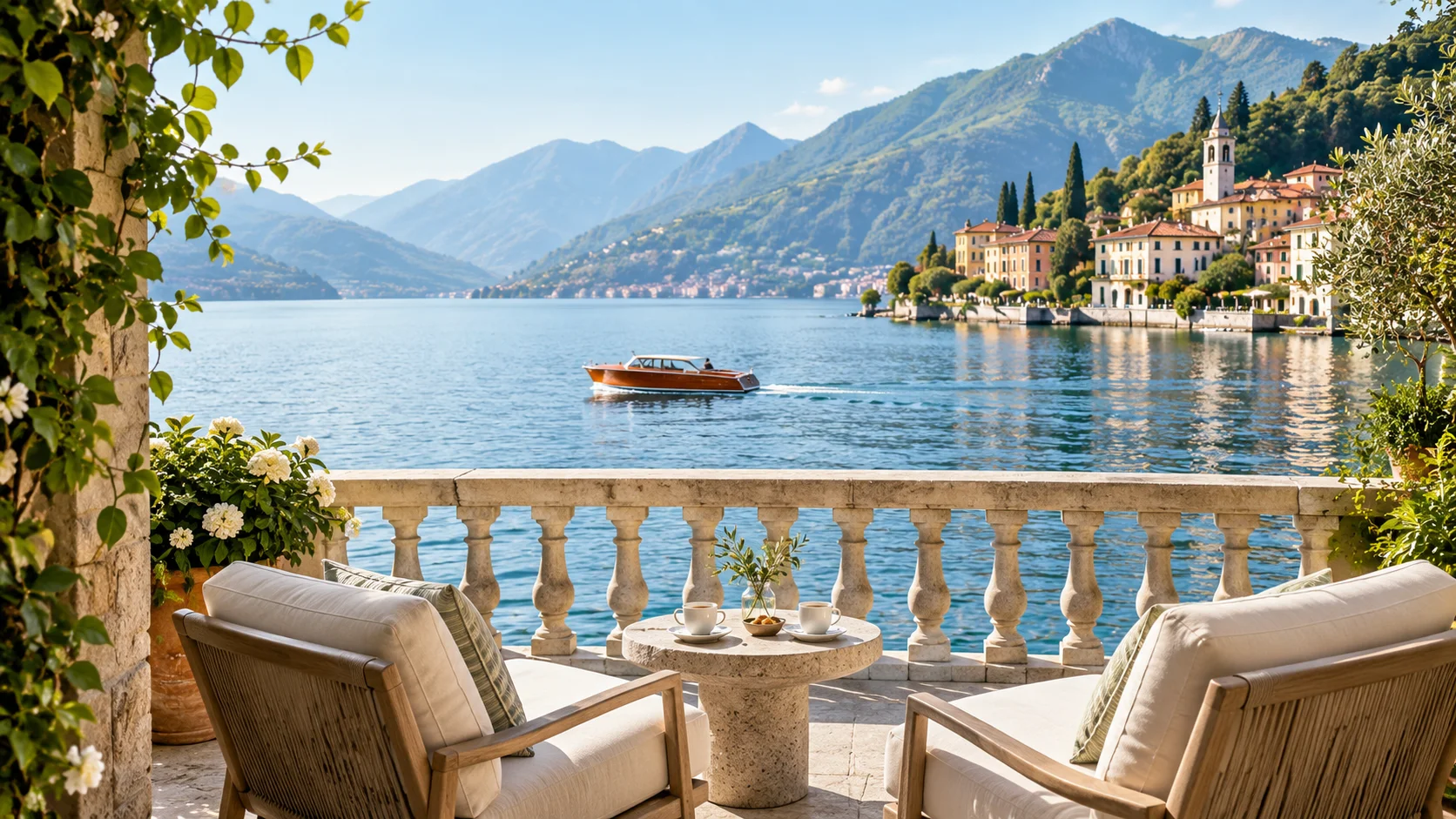
Combine a villa garden visit with an unhurried boat outing. Around Tremezzo, Villa Carlotta provides a specific cultural stop, while boat services connect the experience to other lakeside towns. grandhoteltremezzo.com
Worth paying for: A lake-facing terrace you will use and a boat trip with a clearly agreed route.
Check first: Whether a quoted boat service is a sightseeing excursion or a one-way transfer; they are not interchangeable.
Amalfi Coast: Choose Your Town Carefully
For a stay in Amalfi, combine waterfront time with the cathedral, Cloister of Paradise or Paper Museum. These provide alternatives when you want a break from beach and boat activities. Visit Amalfi
Worth paying for: Accommodation with access that suits your mobility and daily plans.
Check first: Steps between the property, road and waterfront. A panoramic setting can involve extra travel whenever you leave the hotel.
Which Base Suits Your Trip?
| Choice | Choose the First When… | Choose the Second When… |
|---|---|---|
| Central Florence or rural Tuscany | Museums, restaurants and independent evenings are priorities. | You want estate time, countryside scenery and planned excursions. |
| Lake Como or Amalfi Coast | Your ideal days involve lake scenery, villa gardens and boat outings. | You want coastal towns, sea excursions and beach time. |
| City hotel or countryside villa | You prefer daily services and easy access to activities. | Your group values shared private space and a slower routine. |
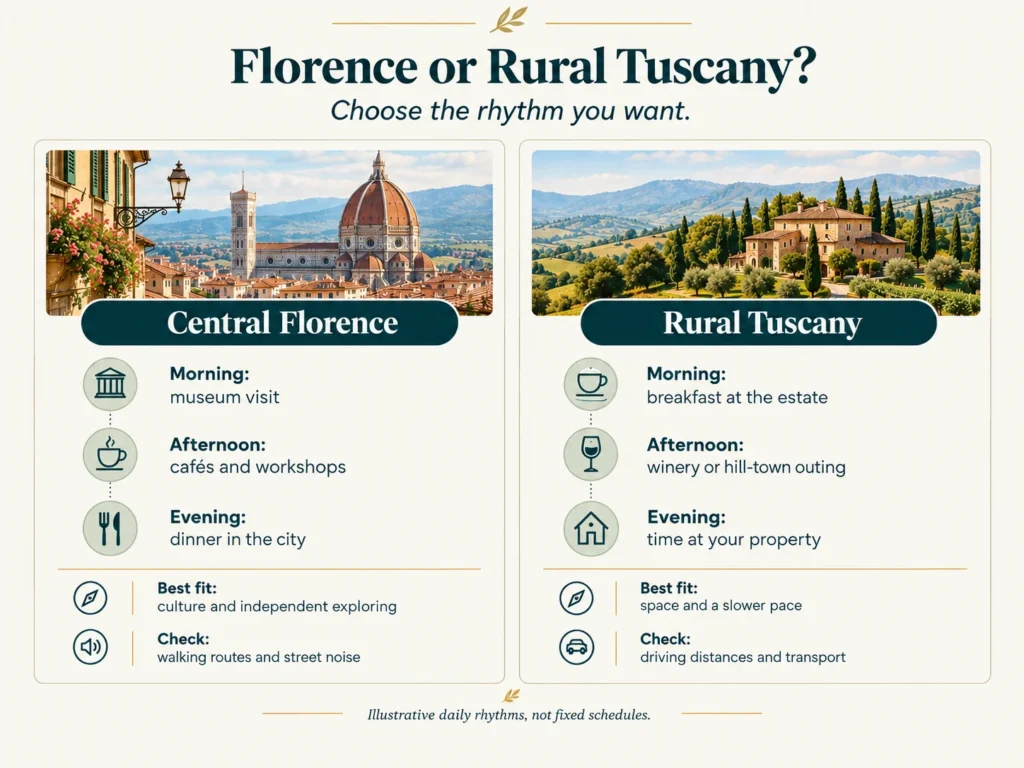
If both options appeal, decide how much time you want to spend at the property. That often reveals which setting deserves more nights.
When to Visit Italy
Choose dates around the region and activity. These are useful planning windows, with weather and operating schedules still requiring checks.
| Destination or experience | Months to consider | Main trade-off |
|---|---|---|
| Florence and rural Tuscany | May–June or mid-September–October | Summer heat eases outside peak months; spring and fall can bring rain. |
| Lake Como gardens and sightseeing | April–June or September–October | Early and late-season dates need closer checks of hotel and transport schedules. |
| Amalfi Coast walking and sightseeing | May, early June or September | Popular dates can still be busy; boat trips remain weather-dependent. |
| Amalfi Coast beach-focused stay | June–September | July and August bring more heat and heavier demand. |
Visit Tuscany identifies May as a particularly appealing month and describes generally mild conditions from mid-September through October. Italian Lakes guidance highlights spring gardens and reduced winter hotel availability. Amalfi Coast seasonal guidance distinguishes sightseeing months from the busiest summer beach period. Visit Tuscany
For Rome and Venice, compare spring and fall dates for a walking-heavy itinerary, then check major events and attraction availability. Do not assume shoulder season automatically means low prices or empty sights.
Three Luxury Stays to Compare
These examples illustrate different accommodation styles. Suitability depends on your dates, room category and daily plans.
| Property | Why consider it? | What to weigh before booking |
|---|---|---|
| Four Seasons Hotel Firenze | Historic palace accommodation with a substantial private garden; useful when you want city culture and time to retreat. | Map your main sights from its Borgo Pinti location and decide how much you will use the grounds. |
| Rosewood Castiglion del Bosco | Suites and villas in the Tuscan countryside, including villas with private pools. | Check the individual villa’s position, bedroom configuration and transport arrangements. |
| Grand Hotel Tremezzo | A Lake Como stay with a marina and vintage boats available for excursions. | Confirm room views, boat charges and arrangements for your preferred outings. |
Property features above are documented on the hotels’ official websites; they are examples to evaluate, rather than a ranked hotel list. Four Seasons Firenze
Hotel or Private Villa?
Choose a hotel for a shorter stay, straightforward daily service and access to restaurants or sightseeing.
Consider a villa when several travelers will use shared living areas, outdoor space and private facilities. Compare the complete arrangement: housekeeping, meals, groceries, pool heating and transport.
“Staffed” does not necessarily mean a chef and housekeeping are available whenever you want. Request the service hours and inclusions in writing.
Two Practical Luxury Italy Itineraries
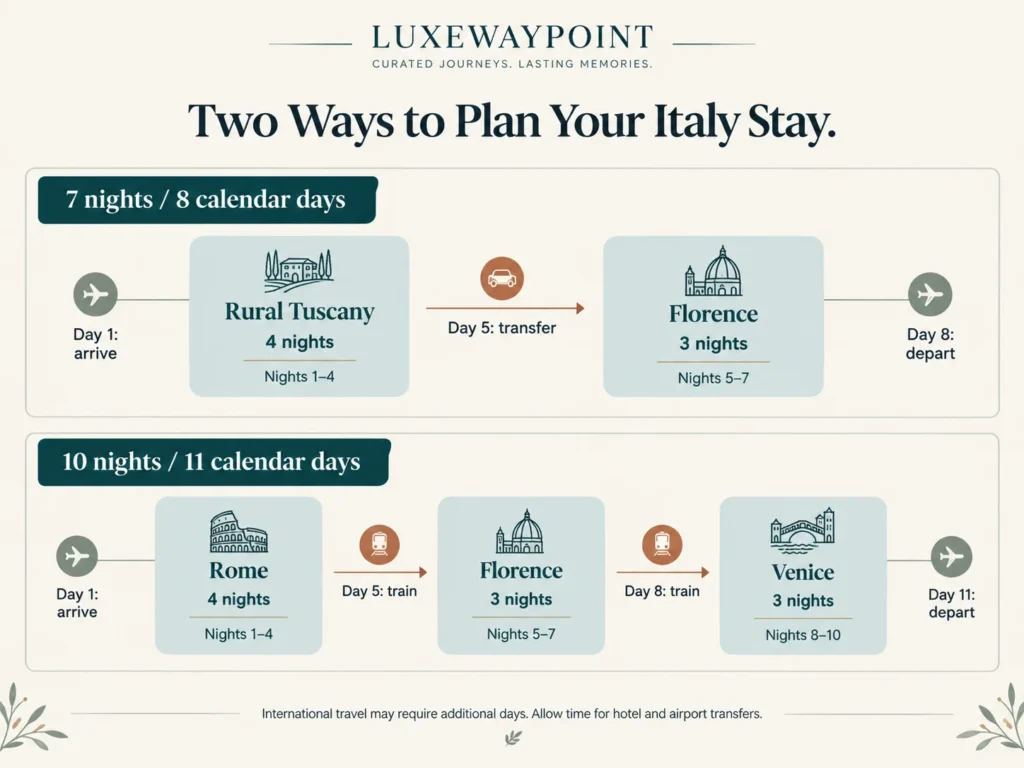
These examples count nights in Italy. International travel may require additional days.
Seven Nights: Tuscany and Florence
Four nights in rural Tuscany + three nights in Florence
- Day 1: Arrive and transfer to your countryside accommodation; keep the evening free.
- Days 2–4: Plan one winery outing, one hill-town visit and time at the property.
- Day 5: Transfer to Florence.
- Days 6–7: Explore art, architecture and workshops.
- Day 8: Depart.
Ending in Florence simplifies departure planning compared with leaving directly from a remote estate. Confirm the airport transfer against your flight time. If your arrival is late, reverse the order and assess whether the countryside departure remains practical.
Ten Nights: Rome, Florence and Venice
Four nights in Rome + three nights in Florence + three nights in Venice
- Days 1–4: Rome, balancing major sights with free time.
- Day 5: Travel to Florence.
- Days 6–7: Florence.
- Day 8: Travel to Venice.
- Days 9–10: Venice.
- Day 11: Depart.
Trenitalia’s Frecciarossa connections serve this city sequence. Allow for hotel transfers and luggage handling alongside the rail journey. trenitalia.com
Where flight schedules work, arrive in Rome and depart from Venice. For an early Venice flight, confirm the complete hotel-to-airport journey before choosing the departure time.
Getting Around Comfortably
Trains: A useful starting point for the Rome–Florence–Venice route. Compare departure stations, fare flexibility and the journey between each station and hotel.
Private drivers: Particularly useful for countryside transfers, winery visits and outings with several stops. Confirm waiting time, luggage capacity and the full route in the quote.
Rental cars: Consider one when independent countryside exploring is part of the appeal. Check parking and restricted traffic zones before driving into historic centers; local ZTL rules vary.
Use transport according to each part of the trip. A city stay and a rural estate rarely need identical arrangements.
What to Include in Your Luxury Italy Budget
Compare quotes for the same dates, occupancy, accommodation standard and cancellation terms.
Include:
- Flights, accommodation and applicable taxes.
- Airport, station and intercity transfers.
- Guides, admission tickets and boat excursions.
- Meals, drinks and villa groceries.
- Additional staffing, pool heating or property services.
- Insurance and any booking or planning fees.
For a group, compare the complete villa cost per guest per night with the equivalent hotel arrangement. Include services in both calculations so that a lower accommodation price does not conceal higher daily expenses.
Prioritize spending that improves a specific part of the trip: specialist guiding, a useful location or an easier arrival. Confirm your essential stay or experience, check the route, then finalize connected reservations.
Common Mistakes to Avoid
Treating seven nights as seven full sightseeing days. Arrival, departure and transfers reduce usable time.
Confusing private with exclusive. A private guide may accompany you through attractions during normal public opening hours.
Choosing a property you barely use. A villa pool or extensive hotel grounds offer little value if every day is filled with excursions.
Scheduling a weather-dependent highlight at the last opportunity. Where possible, place a boat outing earlier in your stay to allow some flexibility.
Frequently Asked Questions
Can you combine Lake Como and the Amalfi Coast?
Yes, but allow for a substantial transfer and compare the complete door-to-door journey. For a short vacation, pairing one with a convenient city usually leaves more time to enjoy both stops.
Should you book private experiences every day?
No. Reserve them where specialist knowledge, flexibility or transport support improves the experience. Independent time helps prevent the vacation from feeling overmanaged.
Is a villa better for a family luxury vacation?
It can be, especially when shared space matters. Check bedroom arrangements, pool access, staffing hours and distances to activities. A hotel may be easier for a short stay with frequent outings.
What should you book first?
Identify the reservation with the least flexibility—such as a particular villa, room category or essential experience. Confirm that flights and transfers can support it before committing to the rest of the trip.
Conclusion
A rewarding luxury Italy vacation combines the right setting, realistic travel days and experiences that match your interests. Choose your bases carefully, compare complete costs and leave enough free time to enjoy the accommodation you selected.
Thoughtful planning turns comfort, privacy and expert guidance into a trip worth remembering.
