

Planning a Caribbean vacation becomes difficult when concerns about crime, unfamiliar neighborhoods, transportation, and personal safety make it hard to decide where to go. A beautiful beach or popular resort does not automatically mean every surrounding area is equally safe, especially for families and solo travelers.
Several Caribbean destinations have favorable official travel-advisory assessments, but their safety conditions differ. This guide compares the safest Caribbean islands to visit, explains destination-specific risks, and helps you choose a location based on your travel style, accommodation, and planned activities.
Which Are the Safest Caribbean Islands to Visit?
Aruba, the Cayman Islands, Barbados, Antigua and Barbuda, Curaçao, Bonaire, the British Virgin Islands, Anguilla, and Saint Kitts and Nevis are among the destinations worth considering based on favorable US travel-advisory assessments. Saint Lucia also deserves consideration, although its current US advisory is Level 2.
The following comparison distinguishes destination appeal from the safety precautions travelers should consider.
| Caribbean island | Best for | Important safety consideration |
|---|---|---|
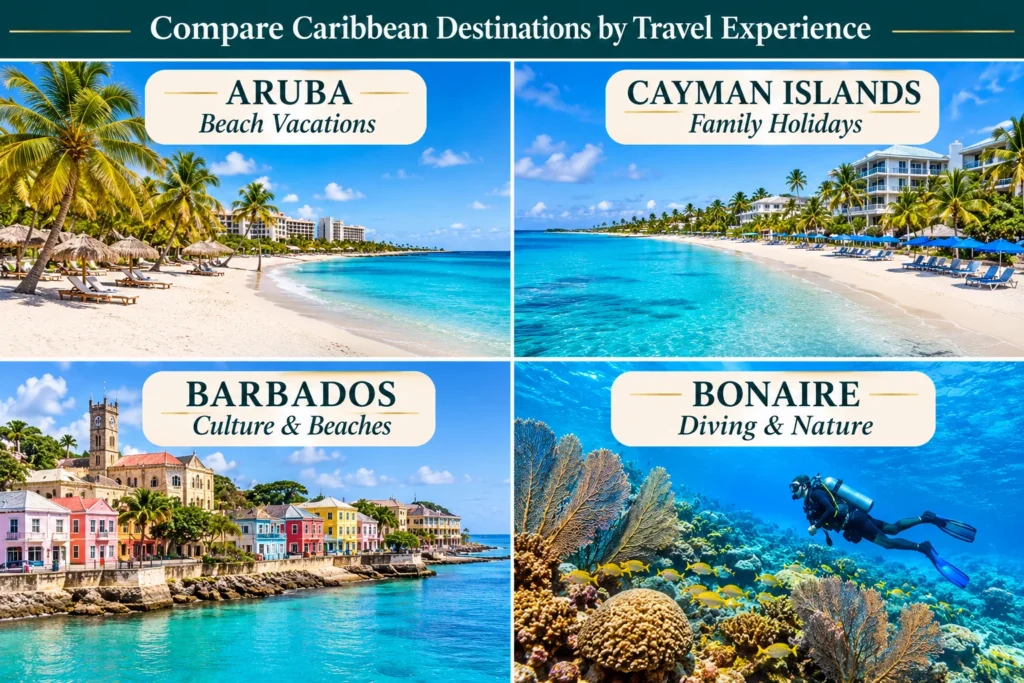
| Aruba | Beach holidays and couples | Petty theft and vehicle security |
| Cayman Islands | Families and resort stays | Medical care and emergency access |
| Barbados | Culture and beaches | Violent crime and swimming conditions |
| Antigua and Barbuda | Relaxed beach vacations | Theft and isolated locations |
| Curaçao | Culture and coastal exploration | Personal security and transport |
| Bonaire | Diving and nature tourism | Diving and marine safety |
| British Virgin Islands | Sailing and island hopping | Boating and weather conditions |
| Anguilla | Quiet beach vacations | Recent serious crime reports |
| Saint Kitts and Nevis | History and relaxed holidays | Personal security |
| Saint Lucia | Couples and outdoor adventures | Level 2 crime advisory |
Travel advisory classifications are not crime-rate rankings or guarantees of safety. Check the latest official guidance before booking.
1. Aruba: Best for Beach Vacations and First-Time Visitors
Aruba is a popular Caribbean destination known for white-sand beaches, clear turquoise water, established resorts, and organized tourist facilities. Palm Beach and Eagle Beach are particularly popular with visitors looking for swimming, beachfront accommodation, restaurants, and water activities.
The island’s developed tourism areas make it convenient for travelers who prefer organized excursions and accessible services. Aruba is currently classified at Level 1 by the US Department of State, meaning normal precautions are recommended.
However, petty theft and occasional street crime remain relevant concerns. Visitors should pay particular attention to rental vehicles and unattended belongings, especially when visiting beaches or remote locations.
Safety considerations in Aruba:
- Keep passports and valuables inside secure accommodation.
- Avoid leaving phones and bags unattended on beaches.
- Do not leave personal belongings inside rental vehicles.
- Use reputable transportation services.
- Avoid isolated areas after dark.
Best for: Couples, families, first-time Caribbean visitors, and travelers who prefer established tourist facilities.
Official resource: US Department of State – Aruba.
2. Cayman Islands: Best for Families and Organized Resort Holidays
The Cayman Islands are an appealing choice for travelers seeking established tourism facilities, beautiful beaches, and organized recreational activities. Grand Cayman is the main island for international visitors and offers a combination of resorts, restaurants, shopping, and marine attractions.
Seven Mile Beach is particularly popular for its beachfront accommodation and accessible restaurants. Families can also arrange guided boat excursions, snorkeling trips, and other organized activities.
The Cayman Islands have a favorable US Level 1 travel advisory. Nevertheless, healthcare accessibility is an important consideration. Specialized medical treatment may require additional arrangements, particularly for visitors with existing medical needs.
Safety considerations in the Cayman Islands:
- Choose accommodation with suitable security facilities.
- Keep valuables in hotel safes.
- Use reputable operators for diving and boat excursions.
- Confirm medical insurance and emergency treatment coverage.
- Follow local swimming and boating instructions.
Best for: Families, couples, beach enthusiasts, and travelers who prefer organized resort experiences.
Official resource: US Department of State – Cayman Islands.
3. Barbados: Best for Culture, Beaches, and Family Activities
Barbados combines beautiful beaches with historic attractions, restaurants, local markets, and an established tourism industry. Visitors can enjoy a traditional Caribbean holiday while exploring Bridgetown, local food, and cultural attractions.
The west coast is particularly popular for resort accommodation and relatively sheltered beach experiences. The eastern coastline has a different character, with more exposed Atlantic conditions and stronger waves in some locations.
Barbados currently has a US Level 1 advisory. However, the UK government also reports violent crime, including armed robbery and gang-related shootings. Swimming conditions require separate attention because strong currents can occur, particularly along exposed beaches.
Safety considerations in Barbados:
- Use reputable taxis for transportation.
- Avoid isolated beaches and unfamiliar areas after dark.
- Secure valuables and travel documents.
- Follow swimming warnings and local beach guidance.
- Exercise additional care around nightlife areas.
Best for: Families, couples, cultural travelers, and visitors interested in combining beaches with local experiences.
Official resource: UK Foreign Travel Advice – Barbados.
4. Antigua and Barbuda: Best for Relaxed Beach Vacations
Antigua and Barbuda attract visitors with beautiful beaches, sailing opportunities, luxury resorts, and a relaxed Caribbean atmosphere. While Antigua serves as the main tourism hub, Barbuda appeals to travelers seeking quieter coastal experiences.
English Harbour and Nelson’s Dockyard are popular attractions for visitors interested in maritime history. Travelers can also explore organized boat trips, coastal restaurants, and beachfront resorts.
Antigua and Barbuda have a US Level 1 advisory. However, visitors should take precautions when exploring secluded locations, particularly beaches after dark. Not every beach has lifeguards, and currents can be stronger than they appear.
Safety considerations in Antigua and Barbuda:
- Arrange airport transfers through reputable providers.
- Avoid isolated beaches after dark.
- Use licensed taxis.
- Follow swimming warnings and local beach advice.
- Check excursion operators before booking sailing trips.
Best for: Couples, families, sailing enthusiasts, and travelers seeking a relaxed beach vacation.
Official resource: UK Foreign Travel Advice – Antigua and Barbuda.
5. Curaçao: Best for Cultural Exploration and Coastal Activities
Curaçao offers a different Caribbean experience through its colorful architecture, historic neighborhoods, beaches, and established tourism facilities. It is suitable for travelers who want to combine sightseeing with coastal relaxation.
Willemstad is the island’s best-known urban destination. Its waterfront buildings, historic streets, restaurants, and cultural attractions make it interesting for visitors who enjoy exploring beyond their hotels.
Curaçao also attracts snorkeling and diving enthusiasts because of its coastal marine environment. The US Department of State currently lists the destination at Level 1.
Visitors should still take normal precautions in unfamiliar neighborhoods and protect their belongings when exploring beaches and public areas.
Safety considerations in Curaçao:
- Keep valuables secure when visiting beaches.
- Avoid isolated locations after dark.
- Use reputable transportation services.
- Choose established operators for water activities.
- Keep important travel documents secure.
Best for: Couples, cultural travelers, divers, and visitors interested in combining sightseeing with beach activities.
Official resource: US Department of State – Curaçao.
6. Bonaire: Best for Diving and Nature Tourism
Bonaire is particularly popular among travelers interested in scuba diving, snorkeling, marine conservation, and outdoor exploration. Its tourism experience is more nature-focused than that of many Caribbean destinations dominated by large resorts.
Bonaire National Marine Park is one of its major attractions. Visitors can explore designated diving locations, coral reefs, and coastal environments while learning about the island’s marine ecosystem.
The US Department of State lists Bonaire at Level 1. However, travelers should not overlook the practical risks associated with diving and outdoor activities. Equipment, weather, currents, and operator qualifications all matter.
Safety considerations in Bonaire:
- Use qualified diving and snorkeling operators.
- Check equipment before participating in water activities.
- Follow marine park regulations.
- Check weather and sea conditions before excursions.
- Secure belongings when leaving rental vehicles.
Best for: Diving enthusiasts, nature lovers, couples, and outdoor adventure travelers.
Official resource: UK Foreign Travel Advice – Bonaire, St Eustatius and Saba.
7. British Virgin Islands: Best for Sailing and Island Hopping
The British Virgin Islands are popular with travelers interested in sailing, private boat excursions, and exploring multiple islands during one vacation.
Tortola is the largest island and a common starting point for exploring the territory. Virgin Gorda is famous for The Baths, where enormous granite boulders create natural pools and scenic coastal passages.
The British Virgin Islands have a US Level 1 advisory. However, safety during a sailing vacation depends on more than local crime conditions. Boat maintenance, weather, operator qualifications, and emergency equipment are equally important.
Safety considerations in the British Virgin Islands:
- Book excursions through reputable sailing companies.
- Check weather and sea conditions before departing.
- Wear appropriate life jackets.
- Confirm emergency communication arrangements.
- Follow local boating and navigation instructions.
Best for: Couples, sailing enthusiasts, private groups, and travelers interested in island exploration.
Official resource: US Department of State – Travel Advisories.
8. Anguilla: Best for Quiet Beaches and Relaxed Travel
Anguilla is known for beautiful beaches, a smaller tourism environment, and a relaxed atmosphere. Shoal Bay East and Meads Bay are among its most recognized coastal destinations.
The island appeals to visitors who prefer peaceful beach holidays, smaller hotels, and private accommodation rather than busy urban tourism areas.
The US Department of State currently lists Anguilla at Level 1. However, the UK Foreign, Commonwealth and Development Office reports a recent increase in serious gang-related crime involving firearms and robbery.
This is an important distinction: a favorable overall travel-advisory classification does not mean every location is equally safe.
Safety considerations in Anguilla:
- Avoid isolated beaches after dark.
- Keep accommodation doors and windows secured.
- Avoid displaying expensive jewelry or large amounts of cash.
- Store important documents securely.
- Follow current local safety advice.
Best for: Couples, beach lovers, and travelers seeking a quieter Caribbean vacation who are comfortable following additional precautions.
Official resource: UK Foreign Travel Advice – Anguilla.
9. Saint Kitts and Nevis: Best for History and Relaxed Island Experiences
Saint Kitts and Nevis provide a peaceful Caribbean getaway, combining historic attractions, volcanic landscapes, scenic coastlines, and intimate resort settings. Visitors to Saint Kitts can explore Brimstone Hill Fortress National Park, enjoy
The US Department of State currently classifies Saint Kitts and Nevis at Level 1. Travelers should still use sensible precautions when visiting unfamiliar neighborhoods and exploring isolated locations.
Organized excursions and established accommodation can make travel planning easier, especially for first-time visitors.
Safety considerations in Saint Kitts and Nevis:
- Use established transportation providers.
- Keep valuables out of sight.
- Avoid isolated areas after dark.
- Check local guidance before visiting remote beaches.
- Follow local road and driving regulations.
Best for: Couples, families, history enthusiasts, and travelers seeking a quieter Caribbean destination.
Official resource: US Department of State – Travel Advisories.
10. Saint Lucia: Best for Couples and Outdoor Adventures
Saint Lucia is known for dramatic volcanic scenery, tropical rainforest, beautiful beaches, and romantic accommodation. Its landscape makes it particularly appealing to couples and travelers interested in outdoor experiences.
The Pitons are among the island’s most recognizable natural landmarks. Visitors can explore hiking trails, waterfalls, coastal resorts, and scenic viewpoints around Soufrière and the northern part of the island.
An important consideration is its current US travel-advisory classification: Saint Lucia is at Level 2, meaning travelers should exercise increased caution. The advisory highlights crime concerns, including violent crime. This does not mean every visitor will encounter problems, but it deserves consideration when selecting accommodation and planning excursions.
Safety considerations in Saint Lucia:
- Use reputable tour operators for hiking and excursions.
- Avoid isolated areas after dark.
- Keep valuables secure.
- Check swimming conditions before entering the water.
- Arrange transportation through established providers.
Best for: Couples, honeymooners, families, and outdoor adventure enthusiasts who understand the additional precautions associated with its Level 2 advisory.
Official resource: US Department of State – Saint Lucia Travel Advisory.
How Are the Safest Caribbean Islands Evaluated?
There is no single internationally accepted ranking that identifies the safest Caribbean island for every traveler. Different governments assess destinations using their own travel-advisory systems, crime information, health considerations, and security risks.
For this guide, US Department of State travel-advisory classifications provide a consistent reference point. However, these classifications should not be interpreted as comparative crime statistics.
Understanding US Travel Advisory Levels
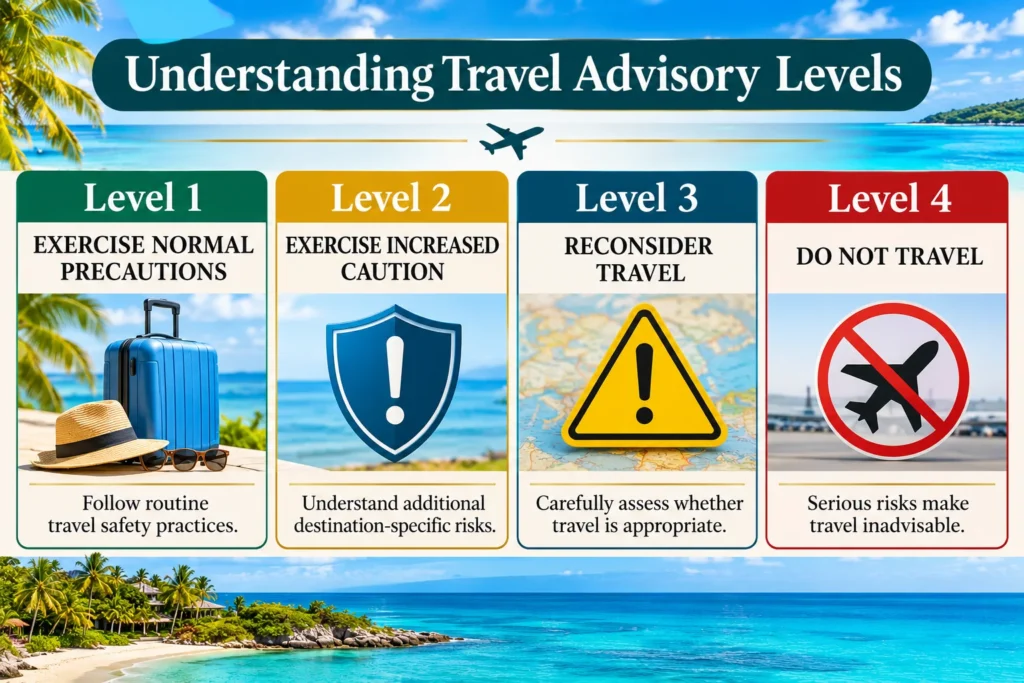
| Level | Meaning | What Travelers Should Understand |
|---|---|---|
| Level 1 | Exercise normal precautions | Follow routine travel-safety practices |
| Level 2 | Exercise increased caution | Understand additional destination-specific risks |
| Level 3 | Reconsider travel | Carefully assess whether the trip is appropriate |
| Level 4 | Do not travel | Serious risks make travel inadvisable |
A Level 1 destination is not necessarily safer than every Level 2 destination in every individual crime or safety measurement. Advisory levels communicate government travel guidance rather than a standardized crime ranking.
Travelers should also review their own government’s advice because recommendations can differ according to nationality and available information.
Five Factors That Matter When Comparing Caribbean Island Safety
1. Crime and Personal Security
Consider reported theft, robbery, violent crime, and risks around accommodation, nightlife, beaches, and tourist attractions.
2. Healthcare Accessibility
Check whether the destination has suitable hospitals, emergency services, and medical facilities for your needs. Smaller islands may require medical evacuation for specialized treatment.
3. Transportation Safety
Consider road conditions, taxi licensing, public transportation, driving requirements, and airport-transfer arrangements.
4. Beach and Water Safety
Strong currents, rough seas, diving conditions, and limited lifeguard coverage can create risks even in destinations with favorable crime assessments.
5. Weather and Natural Hazards
Caribbean destinations can experience hurricanes, tropical storms, and other weather-related disruptions. Check official forecasts and local emergency guidance before traveling.
Which Caribbean Islands Are Best for Different Travelers?
The best destination depends on your personal safety priorities, accommodation preferences, and planned activities.
Best Caribbean Islands for Families
The Cayman Islands, Aruba, and Barbados are worth considering for family vacations because they offer established tourism facilities, organized activities, and a range of accommodation options.
Parents should compare healthcare access, children’s facilities, swimming conditions, and the distance between their accommodation and attractions.
Best Caribbean Islands for Solo Travelers
Aruba, Curaçao, and the Cayman Islands offer established tourist areas, restaurants, and organized excursions.
Solo travelers should prioritize secure accommodation, reliable transportation, and activities with reputable operators. Avoiding isolated areas after dark is particularly important.
Best Caribbean Islands for Couples
Anguilla, Aruba, and Saint Lucia offer attractive options for couples interested in beaches, scenic accommodation, and relaxed holidays.
However, couples should research their accommodation’s location and arrange transportation before evening outings.
Best Caribbean Islands for Outdoor Adventures
Bonaire and the British Virgin Islands are particularly suitable for visitors interested in diving, sailing, snorkeling, and marine activities.
Choose qualified operators, check weather conditions, and confirm that your travel insurance covers planned activities.
Common Safety Mistakes to Avoid When Visiting the Caribbean
Even a destination with a favorable travel advisory can present risks when travelers overlook basic precautions. Avoiding the following mistakes can make your vacation more comfortable.
1. Assuming a Level 1 Advisory Means Zero Risk
A Level 1 classification recommends normal precautions. It does not mean crime, accidents, or other travel risks are absent.
Research the specific areas you plan to visit instead of relying on an island-wide label.
2. Leaving Valuables Unattended at the Beach
Phones, passports, cameras, and wallets can attract opportunistic theft. Carry only essential items and use secure storage whenever possible.
3. Walking Alone Through Unfamiliar Areas at Night
Some locations may be less suitable for walking after dark. Use reputable transportation services and ask your accommodation about local safety conditions.
4. Booking Unverified Excursions
Cheap boat trips, diving activities, and unofficial tours may not provide suitable safety equipment or qualified staff.
Check operator credentials, safety arrangements, and emergency procedures before booking.
5. Ignoring Healthcare and Travel Insurance
Medical facilities and emergency treatment options vary between islands. Check whether your insurance covers emergency care, medical evacuation, and planned adventure activities.
6. Ignoring Weather and Water Conditions
Beautiful Caribbean beaches can have strong currents, rough seas, and sudden weather changes. Follow local swimming warnings and check forecasts before outdoor activities.
Practical Safety Checklist Before Traveling
Use this checklist before confirming your Caribbean vacation:
- Review your government’s latest travel advisory.
- Research the safety conditions around your accommodation.
- Arrange airport transfers through reputable providers.
- Purchase suitable travel insurance.
- Save local emergency contact numbers.
- Keep copies of your passport and important documents.
- Secure valuables and avoid displaying expensive belongings.
- Check local weather and beach conditions.
- Verify excursion and diving operators.
- Share your itinerary with someone you trust.
These basic preparations help reduce common travel risks without unnecessarily limiting your vacation experience.
Frequently Asked Questions
What is the safest Caribbean island to visit?
There is no universally established safest Caribbean island. Aruba, the Cayman Islands, Barbados, Antigua and Barbuda, and several other destinations have favorable US Level 1 travel advisories. However, local crime conditions and individual travel needs should also influence your decision.
Which Caribbean island has the lowest crime rate?
A reliable single-island ranking cannot be established from travel advisories alone. Crime statistics are collected and reported differently across Caribbean countries. Travelers should consult recent official crime statistics rather than assuming that the lowest advisory level represents the lowest crime rate.
What are the safest Caribbean islands for families?
The Cayman Islands, Aruba, and Barbados are worth considering for family vacations because of their established tourism facilities and organized activities. Parents should also evaluate healthcare access, swimming conditions, and accommodation security.
Is Aruba safe for tourists?
Aruba is generally considered a favorable destination for tourists and currently has a US Level 1 travel advisory. However, petty theft and occasional street crime occur, so visitors should protect their belongings and avoid remote areas at night.
Is the Caribbean safe for solo female travelers?
Many Caribbean destinations have established tourist areas and organized travel services, but safety varies by island and location. Solo female travelers should choose secure accommodation, use reputable transportation, avoid isolated areas after dark, and share their travel plans with someone they trust.
Is Barbados safer than Jamaica?
A simple comparison cannot establish that one destination is universally safer. The US Department of State currently lists Barbados at Level 1 and Jamaica at Level 2. However, travelers should examine the specific crime risks and location-based guidance for both destinations before booking.
What is the biggest safety concern for Caribbean tourists?
Common concerns include petty theft, transportation risks, unfamiliar areas after dark, and water-related accidents. The relative importance of each risk depends on the destination and planned activities.
When is the safest time to visit the Caribbean?
No month eliminates travel risks. December through April is generally a popular period for Caribbean holidays because it falls outside the official Atlantic hurricane season, which runs from June 1 through November 30. Travelers should still monitor weather forecasts and local advisories.
Final Thoughts
The safest Caribbean islands to visit are not necessarily the destinations with the most expensive resorts or the fewest tourist attractions. They are destinations where travelers can make informed decisions using current safety information, suitable accommodation, reliable transportation, and responsible activity planning.
Aruba, the Cayman Islands, Barbados, Antigua and Barbuda, Curaçao, Bonaire, the British Virgin Islands, Anguilla, and Saint Kitts and Nevis are worth considering based on their favorable US travel-advisory classifications. Saint Lucia also remains an option, but its Level 2 classification deserves additional attention.
Before booking, check your own government’s latest travel guidance and research the specific areas you plan to visit. A well-planned vacation, combined with sensible precautions, can help you enjoy the Caribbean with greater confidence.
Official sources and fact-checking
For publication, use these authoritative sources rather than relying exclusively on travel blogs:
- US Department of State – Travel Advisories
- US Department of State – Saint Lucia Advisory
- UK Government – Anguilla Safety and Security
- UK Government – Barbados Safety and Security
The Saint Lucia individual advisory page reports Level 2, issued July 10, 2026, while the general advisory listing has shown a conflicting Level 1 entry. Use the individual country advisory and verify it again immediately before publication. U.S. Department of State – Travel+1
