

Planning a luxury European vacation can feel surprisingly difficult. Famous hotels, private tours and glamorous destinations compete for attention, while rushed routes and complicated transfers can turn an expensive journey into an exhausting one.
This luxury Europe travel guide will help you choose suitable destinations, create a realistic route and decide where premium services add meaningful value. It covers selected European cities, coastal regions, islands and countryside escapes rather than every country in Europe.
Best Luxury Destinations in Europe
| Destination | Best For | Suggested Stay | Where Luxury Adds Value |
|---|---|---|---|
| Paris | Art, fashion and dining | 3–4 nights | Central hotel and specialist guide |
| Tuscany | Villas, wine and countryside | 4–6 nights | Staffed villa, driver and winery access |
| Amalfi Coast | Coastal scenery and romance | 4–5 nights | Private boat and organized transfers |
| Swiss Alps | Mountains, rail and wellness | 4–6 nights | Scenic suite, spa and luggage service |
| Greek Islands | Beaches, sailing and privacy | 5–8 nights | Private villa or skippered yacht |
| French Riviera | Art, glamour and coastal towns | 4–6 nights | Driver, boat day and central hotel |
| London | Theater, history and shopping | 3–5 nights | Convenient location and private guide |
| Vienna | Music, architecture and cafés | 3–4 nights | Historic hotel and premium concert seats |
Suggested stays are editorial planning estimates. International travel days, personal pace and seasonal transport may require additional time.

Paris: Luxury Through Access and Location
Paris rewards travelers who plan ahead. A central hotel reduces daily travel, while a knowledgeable guide can bring context to museums, architecture and historic neighborhoods.
Signature experience: Visit a major museum with an art historian, followed by an unhurried lunch in Saint-Germain-des-Prés or the Marais.
Worth paying for: A central location, advance museum reservations and a private art, architecture or food guide.
When to consider going: Late spring and early fall can suit travelers seeking comfortable conditions, although these periods remain popular.
Avoid: Scheduling formal dinners every night. Leave time for neighborhood cafés, markets and spontaneous walks along the Seine.
Tuscany: Villas, Wine and a Slower Pace
Tuscany works best as a regional stay rather than a rapid tour of Florence, Siena and every famous hill town. One countryside base provides more time for wine estates, markets and quiet afternoons.
Signature experience: Arrange a private winery visit followed by dinner at your villa using ingredients selected from a local market.
Worth paying for: A staffed villa for a family or group, an experienced driver and access to smaller wine estates that require reservations.
When to consider going: Late spring and early fall are useful planning windows for countryside touring, outdoor dining and vineyard visits.
Avoid: Changing accommodation every night. A well-positioned base usually creates a calmer experience.
Amalfi Coast: Make the Journey Easier
The Amalfi Coast is spectacular but logistically demanding. Narrow roads, seasonal congestion and luggage transfers can consume valuable time when arrangements are left until arrival.
Signature experience: Explore the coastline by private boat, stopping at quieter coves before returning in the evening.
Worth paying for: A private arrival transfer, conveniently located accommodation and a boat with an experienced local skipper.
When to consider going: May, June and September are commonly considered for warm weather outside the busiest midsummer period.
Avoid: Treating Positano, Amalfi, Ravello and Capri as a daily checklist. Choose one base and explore selectively.
Swiss Alps: Scenery Without Constant Driving
The Swiss Alps suit travelers who value dramatic landscapes, scenic rail journeys and wellness. Zermatt, St. Moritz, Gstaad and the Jungfrau region offer different combinations of skiing, hiking and refined hospitality.
Signature experience: Travel through the mountains by panoramic train, then spend the evening in a spa overlooking the peaks.
Worth paying for: A room with a true mountain view, luggage support and accommodation close to the station or main lift.
When to consider going: Summer suits hiking and outdoor scenery, while winter serves travelers primarily interested in snow and skiing.
Avoid: Renting a car automatically. Rail can provide a calmer experience when the journey is part of the attraction.
Greek Islands: Choose the Right Island
The Greek Islands do not offer one standard luxury experience. Santorini suits dramatic views and short romantic stays, Crete combines beaches with culture and food, while Paros and quieter islands support a slower pace.
Signature experience: Charter a skippered boat for swimming, a coastal lunch and access to bays that are difficult to reach by road.
Worth paying for: A private villa for longer stays, a boat day and transfers coordinated with ferry or flight times.
When to consider going: May, June and September often appeal to travelers seeking warm conditions with fewer peak-season crowds.
Avoid: Adding too many islands. Ferry schedules, ports and repeated hotel changes can make the itinerary feel fragmented.
French Riviera: Coast, Culture and Small Towns
The French Riviera offers more than beach clubs and grand hotels. Nice provides museums and useful transport connections, Antibes has an intimate old town, and inland villages offer a quieter contrast to the coast.
Signature experience: Combine a morning boat trip with an afternoon exploring an inland village or artists’ town.
Worth paying for: A central base, a driver for village excursions and one carefully selected sailing experience.
When to consider going: Late spring and early fall can provide a balance between coastal weather and manageable visitor numbers.
Avoid: Choosing remote accommodation simply for a larger room. Time lost in traffic may outweigh the additional space.
London: Spend for Convenience
London combines historic hotels, theater, private collections, shopping and restaurants representing nearly every major cuisine. Because the city is large, location directly affects the quality of the trip.
Signature experience: Explore a historic neighborhood with a specialist guide before attending a West End performance.
Worth paying for: Accommodation near your main interests, carefully selected theater seats and a private history, architecture or food tour.
When to consider going: Late spring and early fall work well for combining indoor cultural attractions with outdoor exploration.
Avoid: Crossing the city several times each day. Group activities by neighborhood to protect your time.
Vienna: Refined and Easy to Explore
Vienna combines imperial architecture, classical music, art and traditional coffeehouse culture within a manageable city. It works well as a standalone cultural break or as part of a route with Prague and Budapest.
Signature experience: Tour an imperial palace with a knowledgeable guide, then attend a performance in one of the city’s respected concert halls.
Worth paying for: A historic central hotel, carefully chosen concert seats and expert guidance through major art collections.
When to consider going: Spring and early fall suit cultural touring, while December attracts travelers interested in concerts and seasonal markets.
Avoid: Booking a performance based only on costumes or advertising. Check the venue, performers and seating plan first.
How Many Destinations Should You Combine?
The following routes favor comfortable pacing. They are planning recommendations rather than fixed rules.
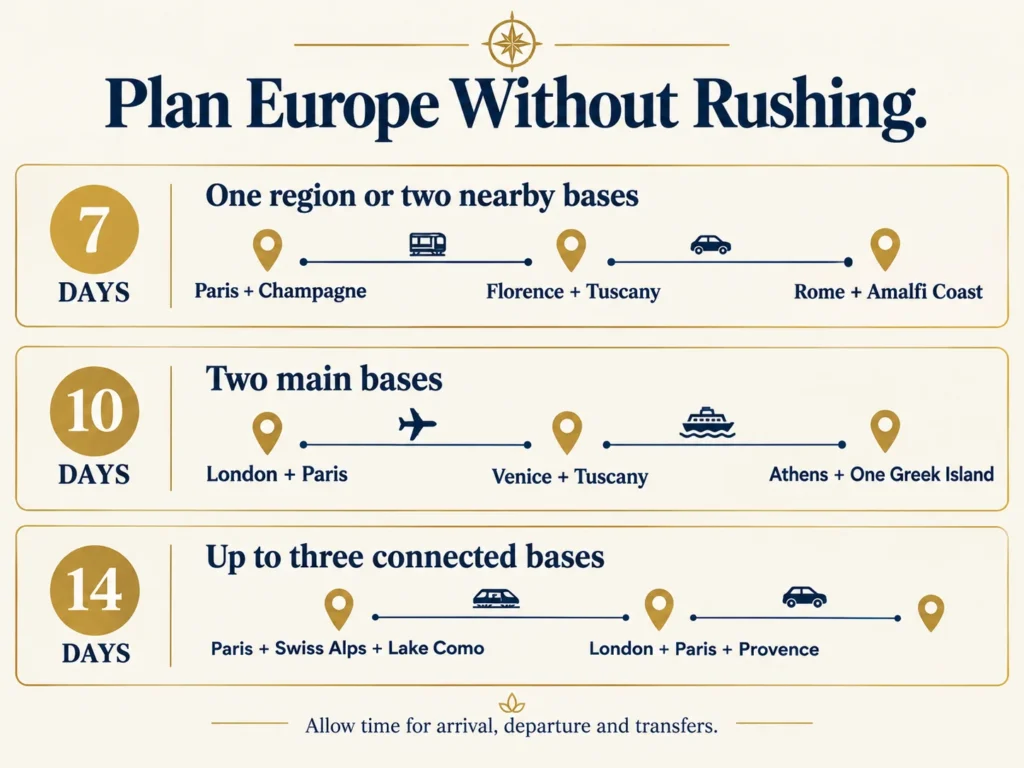
Seven Days: Stay Within One Region
A one-week trip works best in Tuscany, Switzerland, the Greek Islands or the French Riviera. You can also combine one major city with a nearby countryside or coastal destination.
Practical combinations include:
- Paris and Champagne
- Florence and rural Tuscany
- Rome and the Amalfi Coast
- Zurich and the Swiss Alps
Allow for arrival and departure time. A seven-day vacation rarely provides seven complete sightseeing days.
Ten Days: Choose Two Main Bases
Ten days provide enough time for two contrasting destinations without constant movement.
Strong combinations include:
- London and Paris
- Paris and the French Riviera
- Venice and Tuscany
- Rome and the Amalfi Coast
- Athens and one Greek island
Select destinations with direct rail or air connections whenever possible.
Fourteen Days: Use Up to Three Bases
A comfortable two-week journey might combine Paris, the Swiss Alps and Lake Como, or London, Paris and Provence. Three nights per major stop is a useful minimum for many travelers.
Every flight, train and hotel change consumes part of a day. Add a destination only when the experience justifies the transfer.
Best Time for Luxury Travel in Europe
Late spring and early fall often provide a useful balance of comfortable weather and lighter crowds across many European destinations. The official Visit Europe tourism portal also highlights shoulder-season travel for a slower pace and more space at popular attractions.
- April to June: Suitable for cities, countryside and cultural touring.
- July and August: Best for summer atmosphere, beach resorts and long daylight, but popular destinations can be crowded.
- September and October: Strong options for wine regions, Mediterranean coasts and city trips.
- December to March: Suitable for Alpine skiing, festive cities and winter experiences.
Seasonality varies by region. Ski resorts may be busiest when Mediterranean destinations are quiet, so select dates according to your main activity.
Where Luxury Is Worth the Cost
A Better Location
A central hotel may cost more, but it can save hours of daily travel and make early-morning or evening exploration easier.
Specialist Private Guides
An excellent guide provides historical context, manages timing and helps visitors understand complex museums or archaeological sites. Check the guide’s expertise and licensing where applicable.
Complicated Transfers
Private transportation is particularly useful on the Amalfi Coast, in rural Tuscany and for remote Alpine properties. It may provide limited value between cities with convenient high-speed rail connections.
Villas for Families and Groups
A villa can offer more space, privacy and shared experiences. Confirm staffing, cleaning, heating or air-conditioning, accessibility and transportation before comparing its price with a hotel.
Experiences with Limited Access
Private boats, specialist workshops and carefully organized cultural visits can justify their cost when they improve access or understanding. A higher price alone does not guarantee a better experience.
Hotel, Villa or Luxury Train?
Choose a hotel for short city visits, daily service and concierge support. Location should usually take priority over room size.
Choose a villa for groups, privacy and slower countryside or island stays. Villas require more planning when meals, housekeeping and transportation are not included.
Choose a luxury train when the journey is a major part of the vacation. For ordinary city-to-city travel, first-class high-speed rail may offer more flexibility.
When booking cross-border trains, check whether the journey is issued on one ticket or several separate tickets. Passenger protection can differ when multiple operators and tickets are involved. The European Union publishes current guidance on rail passenger rights.
Calculate the Complete Trip Cost
A hotel’s nightly rate does not represent the complete cost of a luxury European vacation. Compare each route using the same categories:
- International and regional flights
- Hotels, villas and local accommodation taxes
- Rail tickets, ferries and private transfers
- Meals, drinks and gratuities
- Guides, museum tickets and boat charters
- Travel insurance and required equipment
- Currency-conversion and payment fees
- A contingency allowance for schedule changes
A more expensive central hotel may reduce transportation costs, while an isolated villa may require a rental car or driver. Evaluate the entire itinerary before choosing accommodation.
Booking Order for a Smooth Trip
Book the least flexible parts first:
- Confirm passport, visa and entry requirements.
- Reserve international flights and high-demand accommodation.
- Secure important trains, ferries and private transfers.
- Book limited-entry museums, guides and performances.
- Add restaurants, boat trips and spa appointments.
- Preserve some unscheduled time in every destination.
Entry requirements depend on nationality and destination. Many short visits within the Schengen Area are subject to a maximum of 90 days in a 180-day period, but travelers should check their individual circumstances through the official EU short-stay guidance.
Travelers who may require authorization should also check the official ETIAS website shortly before departure because eligibility and implementation information can change.
Common Luxury Europe Planning Mistakes
Comparing Room Rates Instead of Complete Costs
Include transfers, meals, local taxes and activities. The lowest room rate does not always produce the least expensive itinerary.
Ignoring Arrival and Departure Time
A remote hotel may require several additional hours after the main flight or train journey. Count the complete door-to-door transfer.
Booking Important Experiences Too Late
Popular museums, guides, restaurants and seasonal boat services can have limited availability. Reserve priority experiences once the route is confirmed.
Leaving No Flexibility
Weather, transportation delays and changes in energy can affect the schedule. Protect some open time instead of pre-booking every hour.
Assuming Five Stars Guarantees the Right Stay
Hotel category alone does not determine suitability. Location, service, privacy, accessibility and connection to the destination may matter more than room size.
Frequently Asked Questions
What is included in a luxury trip to Europe?
A luxury European trip may include centrally located hotels or private villas, first-class rail, private transfers, specialist guides and carefully selected dining or cultural experiences. The exact inclusions depend on the destination and travel style.
Which European destination is best for a first luxury trip?
Paris suits travelers interested in art, dining and fashion, while Tuscany works well for countryside, wine and slower travel. Combining one major city with one nearby region is usually easier than visiting several countries on a first trip.
How far in advance should I plan luxury travel in Europe?
Begin planning once your dates are confirmed. High-demand hotels, villas, museum tickets, guides, trains and boat charters may require earlier reservations during popular travel periods.
Is it better to travel through Europe by train or private car?
High-speed rail is usually convenient between major cities. A private car or driver adds more value in rural Tuscany, the Amalfi Coast and other areas where public transportation or luggage transfers are less convenient.
Is a hotel or private villa better for a luxury European vacation?
Hotels suit short city stays and travelers who want daily service and concierge support. Villas are better for families, groups, privacy and longer countryside or island stays, provided transportation and staffing are arranged.
Can you visit multiple European countries in seven days?
It is possible, but frequent transfers reduce time at each destination. A seven-day trip usually feels more comfortable when focused on one region or two nearby, well-connected bases.
How much does a luxury Europe trip cost?
The total cost depends on season, destination, accommodation, transportation and private experiences. Compare flights, hotels, local taxes, transfers, meals, guides, activities and insurance rather than relying only on the nightly room rate.
Do travelers need ETIAS for a European vacation?
Requirements depend on nationality and destination. Travelers should check the official ETIAS website and relevant embassy guidance shortly before departure because implementation and eligibility information can change.
Conclusion
A successful luxury trip through Europe protects your time as carefully as your budget. Remarkable hotels, villas and private experiences create the most value when they fit a thoughtful route.
Choose fewer destinations, allow enough time in each place and spend where comfort, access or expertise improves the journey. The result will feel refined, personal and comfortably paced.
